Some material claims are visible; others are not
Materials are one of the easiest areas for marketing language to exceed what photographs can prove. A practical guide should separate what can be inspected visually, what can be estimated, and what requires testing or documentation.
| Claim | Photo can help? | What actually verifies it |
|---|---|---|
| Brushing/polish quality | Yes | High-resolution side lighting |
| 904L vs 316L steel | Usually no | Material documentation or analytical testing |
| Sapphire crystal | Partly | Appropriate tester / reliable documentation |
| Ceramic bezel | Partly | Material inspection/testing |
| Gold plating/PVD color | Yes for color | Coating specification for thickness/composition |
| Water resistance | No | Pressure testing of the individual watch |
Steel claims need more than a polished surface
Rolex uses Oystersteel for many steel models, and this material belongs to the 904L steel family. Replica listings often use “904L” as a premium signal. It can be a legitimate construction detail, but visual similarity is not proof of alloy grade. Polish color and corrosion behavior can suggest differences over time, yet they are not a reliable identification method from ecommerce photos.
For most buyers, machining and finishing quality are easier to evaluate directly: crisp transitions, even brushing, smooth edges and consistent case/bracelet color.
Gold tone: color, coating and wear
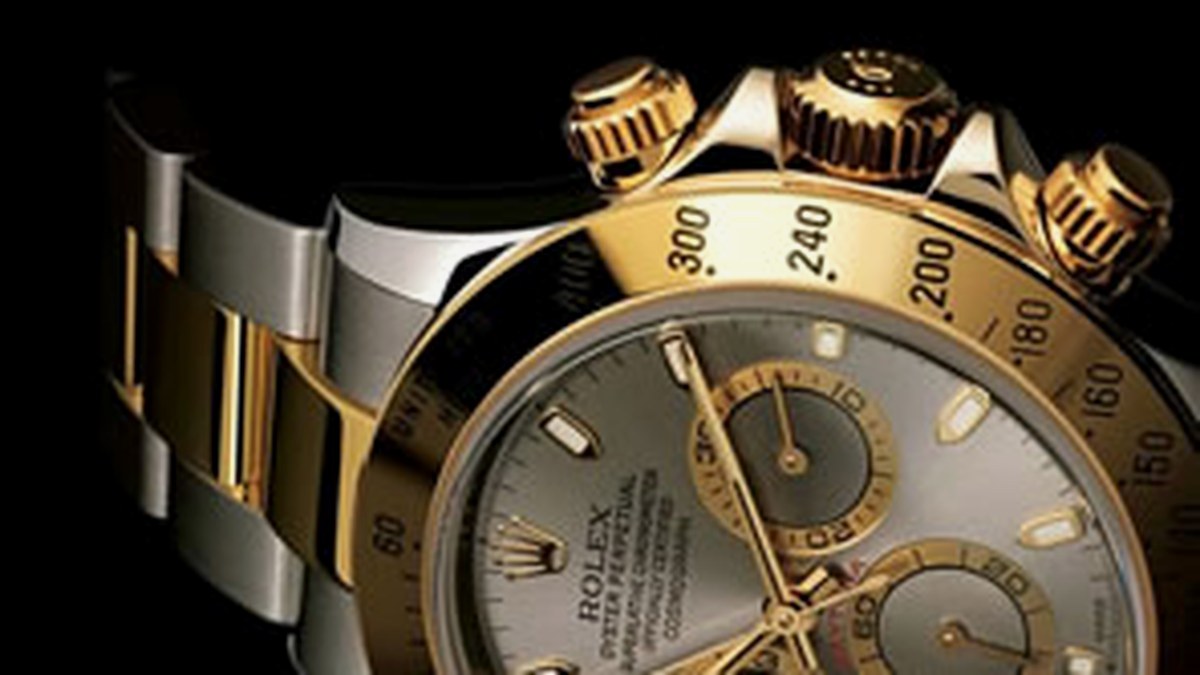
A gold-colored Daytona, Datejust or Day-Date replica may use electroplating, PVD-style coating or another surface treatment over base metal. Ask the seller what process is used and how warranty coverage treats coating wear. Inspect high-friction areas such as clasp edges, bracelet joints, crown and caseback perimeter, because those locations reveal coating durability first.
Weight is only supporting evidence. Manufacturers can alter mass with denser components, so a heavy watch does not prove precious-metal construction.
Crystal and Cyclops under ordinary light
A crystal advertised as sapphire should also be judged for fit, edge profile and anti-reflective treatment. On Datejust and Day-Date models, the Cyclops becomes part of the optical system. Even a good crystal can look wrong when the lens is misplaced or magnification does not suit the date window.
Bezel material from the edge inward
Current Submariner and Daytona references use ceramic Cerachrom bezels in the relevant configurations, while older references use different materials. Replica QC should therefore begin with the correct generation. Check engraving fill, numeral shape, alignment and surface finish before worrying about marketing claims such as “same ceramic as genuine.”
What normal wear reveals
The best material choice depends on wear expectations. A watch intended for occasional use may prioritize visual finish; daily wear places more pressure on clasp, coating, bracelet edges and crystal durability. Record what is visually verified and what remains a seller claim. This simple distinction prevents material marketing from dominating the whole quality assessment.
Finishing quality can be judged even when alloy grade cannot
Collectors often get stuck on 904L versus 316L, yet visible finishing usually affects perceived quality more directly. Check whether brushing runs in the correct direction, polished surfaces are free of waves, edges are not over-rounded and transitions between brushed and polished areas are crisp. These observations are available from photographs and the physical watch.
A beautifully finished unknown alloy can look better than a poorly finished watch that genuinely uses the advertised steel grade. Keep composition and craftsmanship as separate scores.
Coating thickness and color matching
Gold-colored parts should match across bezel, crown, case, bracelet and clasp. Different base parts may accept coatings differently, causing color shifts under neutral light. Ask for a daylight or white-light photo rather than judging only warm studio images.
Coating thickness is generally not visible from a product photo. If a seller publishes a micron specification, treat it as documentation that may need independent verification rather than as a visible fact.
Crystal reflections can affect dial judgments
Anti-reflective coatings change how black dials and polished markers photograph. A strong reflection does not necessarily mean the dial printing is poor. Rotate the watch or ask for another lighting angle before concluding that color or contrast is wrong. For Cyclops models, optical alignment should be checked separately from crystal material.
Ceramic insert color and engraving fill
Ceramic bezels can vary in apparent color depending on lighting. More reliable QC targets include whether numerals are consistently filled, the triangle or scale aligns at 12, and edges meet the metal bezel cleanly. On Daytona and Submariner replicas, these assembly details are often more revealing than trying to identify ceramic composition from a photo.
Rubber gaskets are invisible but critical
Material guides often focus on steel, gold and sapphire while ignoring gaskets. Crown, crystal and caseback seals are central to water resistance. Their quality cannot be judged visually once the watch is assembled, which is why pressure testing is the appropriate evidence rather than surface inspection.
Case machining can reveal more than marketing material names. Look at the underside of lugs, crown-guard transitions, bezel seat and bracelet end-link recesses. High-polish front surfaces are easy to make attractive in photography; hidden or less visible transitions show whether finishing quality is consistent throughout the case.
On bracelets, pay attention to pin or screw fit and the finish inside removable links. Rough internal machining can create sharp edges, loose screws or uneven articulation even when the outer surfaces are polished well. Material grade and machining quality should therefore be scored separately.
Gold-tone durability depends on friction and chemistry as well as coating process. Sweat, desk contact, clasp movement and bracelet articulation concentrate wear in specific locations. Buyers who expect frequent daily use should ask how replacement links or refinishing are handled rather than relying on a generic “won’t fade” claim.
For sapphire and ceramic claims, destructive testing is not appropriate for ordinary buyers. The practical goal is not laboratory certification of every component but honest uncertainty. If a claim cannot be verified without specialized testing, record it as unverified while still judging visible fit and finish. That approach is more rigorous than pretending a photograph proves composition.
Material claims also interact with repair. A coated case may be difficult to refinish after a deep scratch, while bare steel can often be refinished by a competent watchmaker. Ceramic inserts can resist ordinary scratches but may chip if struck. Sapphire resists scratching well but is not unbreakable. These ownership trade-offs matter more than slogans that present one material as universally superior.
When a seller provides a material specification, save it with the order. If the watch later needs service, knowing whether the case is coated, whether the crystal is sapphire and whether the bezel insert is ceramic can affect repair choices and replacement-part matching.